


Joining a cooking lesson at Kain Tulog is an incredibly fun and enriching experience! Whether you’re a beginner or a seasoned cook, each session is filled with hands-on learning, delightful flavors, and friendly guidance. You’ll discover authentic techniques, learn to create flavorful dishes, and connect with fellow food enthusiasts. At Kain Tulog, cooking isn’t just about following recipes; it’s about enjoying the process, sharing culinary traditions, and creating memories in the kitchen. Don’t miss out on this wonderful chance to elevate your cooking skills and have a great time doing it! Please follow our instagram for more information to get the latest cooking lesson menu. We prioritize our guests’ preferences when it comes to what they’d like us to prepare. Please feel free to contact us in advance using the email address <watanuki208@gmail.com>. We look forward to connecting with you before your visit.

5,000 yen / per a person
Duration: 2.5 Hours
Please enjoy seafood while you are in Japan. There are many unique dishes made with fish, cephalopods (squid, cuttlefish, octopus), crustaceans (shrimp, crab, lobster), shellfish and seaweed. The environmental concern including the conservation of fisheries resources has risen internationally and like most people I am hoping that I could eat seafood forever. In order to do that, we must choose fish that are caught sustainably. Japanese people are very knowledgeable about how to eat fish. It is particular about the freshness of the fish. We have been eating sushi and sashimi for a long time. Japanese people also dry and process the fish. I would like to talk about the relationship between Japan and seafood in this lesson.
How to Book & Cancel Policy
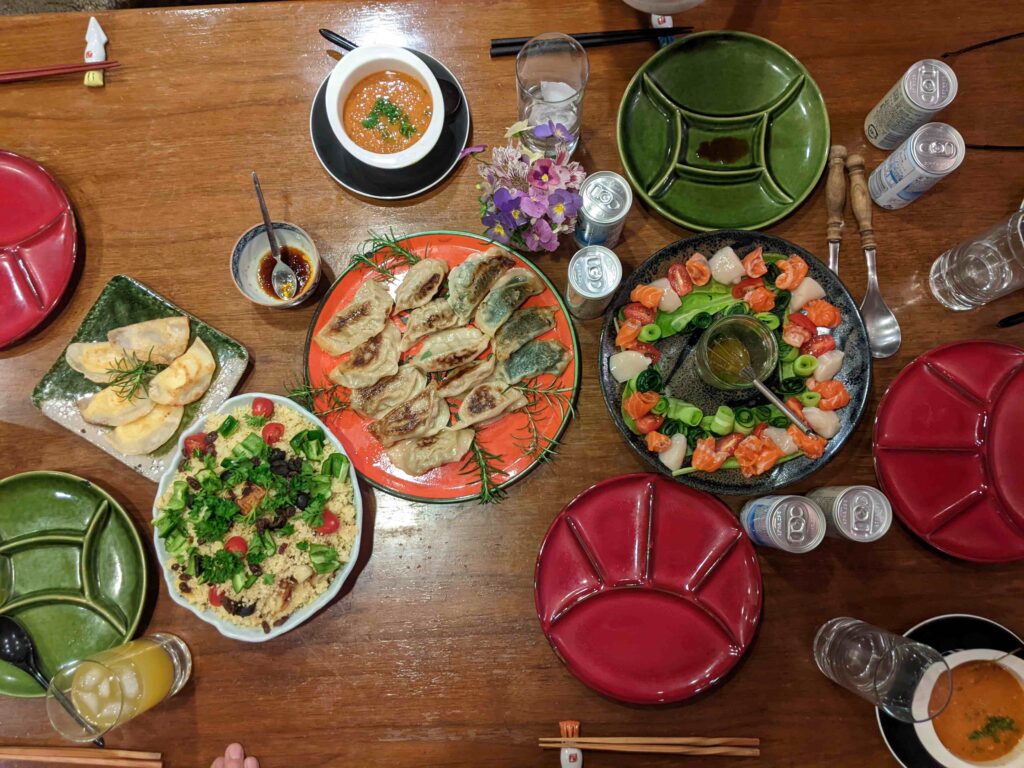
The photo from my lesson. It contains Soup de Poisson and Gyoza made with Sakura Shrimp and Scallops. Gyoza filling is often made with minced pork, but I am interested in seafood. Sakura shrimp are in season now. Eat scallops to support Hokkaido (China, which was the largest export destination, has banned their imports). Gyoza is now international. More and more inbound tourists are requesting to make and enjoy eating gyoza in Japan.

Omusubi (also known as onigiri) is a Japanese rice ball, typically shaped into a triangle or round form, often filled with ingredients like salted salmon, pickled plum, or tuna mayo, and wrapped partially in nori (seaweed). It’s a popular and convenient snack or meal option.
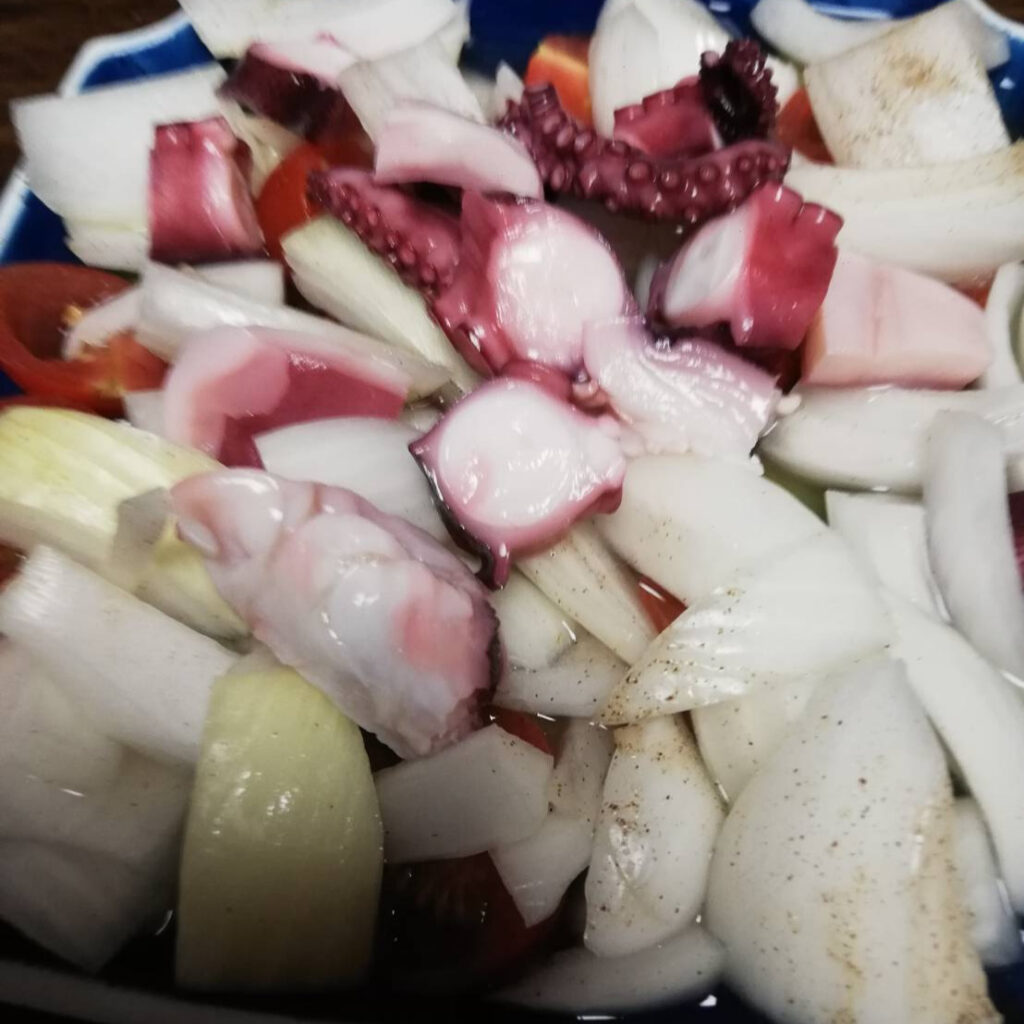
Octopus carpaccio. In Omotesando, Tokyo, it costs 1,650 yen. I’m surprised by the price, but since I also work in the food and beverage industry, I understand the restaurant’s perspective. The cost comes from the extraordinary atmosphere and service (labor costs). I often don’t charge for it because I eat it myself. The effort and cost of ingredients don’t change even if there are one or two guests.
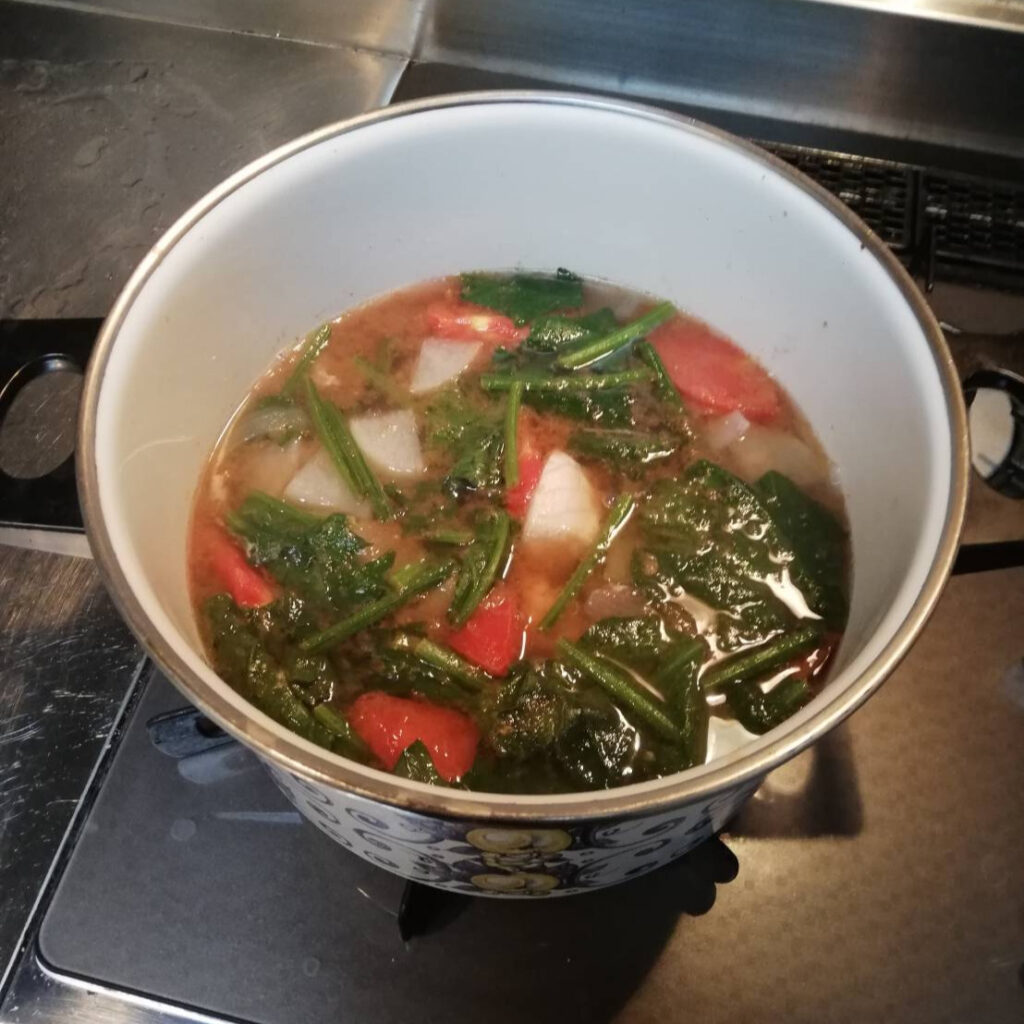
Sinigang na Swordfish. Swordfish was caught by a Taiwanese tuna fishing vessel. Sinigang is a Philippine sour soup. Tamarind (also known as sampalok) is used as the main seasoning. Shrimp or Spanish mackerel are often used, but I changed the fish. I added green beans, radish, tomato, spinach and lemon.
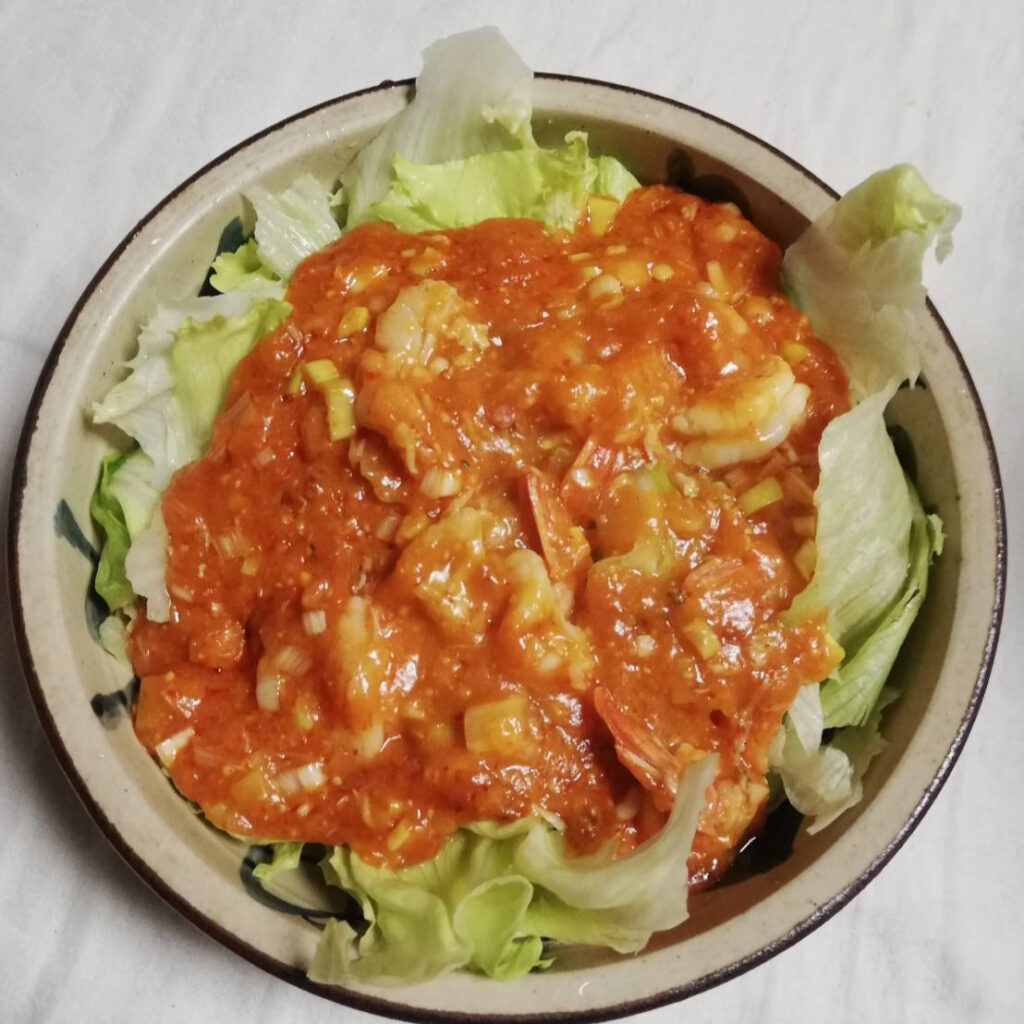
Shrimp chili (Ebi Chili) originated from Chinese Sichuan cuisine. However, it was too spicy, so in 1958, Chinese chef Chen Jianmin, who opened a Sichuan restaurant in Japan, adapted it to have a milder Japanese flavor. It is now a popular staple Chinese dish in Japan. It’s easy to make. The key is to carefully prepare the shrimp. Use sesame oil, ketchup, chicken bones, and chili bean paste. Next guest is from Australia. What to cook? It’s fun to think about it.
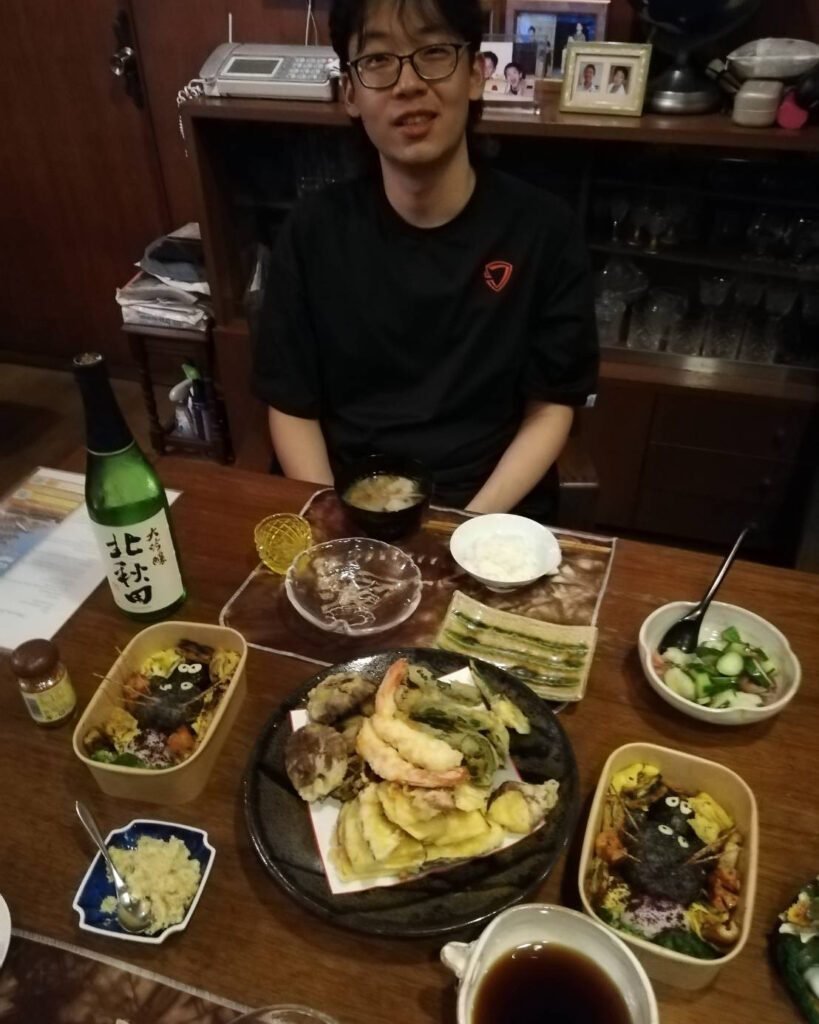
Ingredients are shiitake mushrooms, okra, sweet potato, and shrimp. For the batter, I simply mix tempura flour and water. No eggs are used. I use rapeseed oil for frying. 180°C. Put the shrimp first. The flavor dissolves in the oil. I cook the vegetables in order of firmness: sweet potato → shiitake mushroom → okra. Don’t throw away the shiitake stems, but slice them thinly and add them to the miso soup.
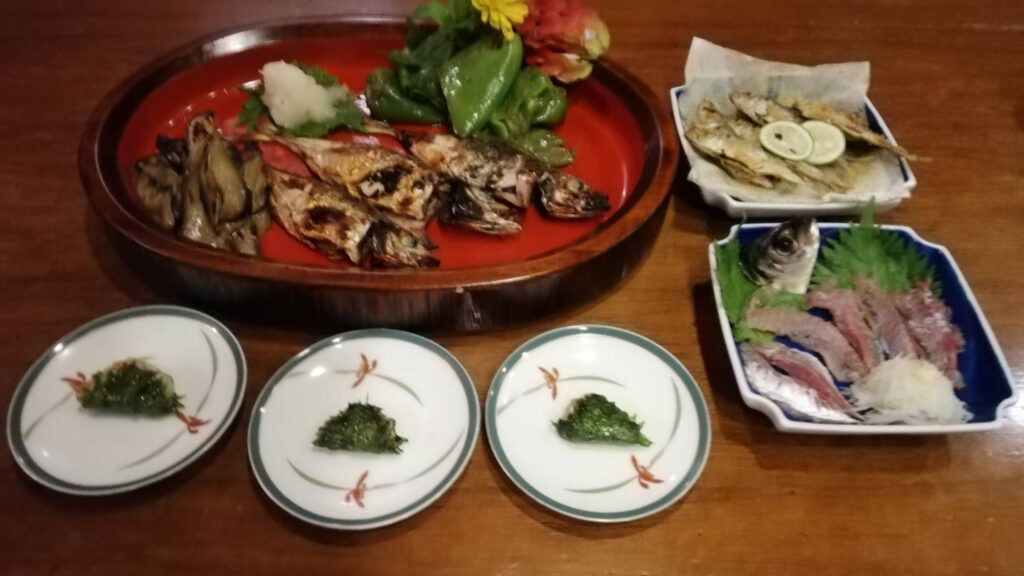
Fishing is fun. But if you catch a lot, cooking is terrible. Filleted, sashimi, salt-grilled, fried, sanga-yaki (Chiba specialty), marinated in nanban sauce. Catch the fish. Cook the fish. Eat the fish. Talk about fish. All that’s left is to just sleep. That’s the concept of my guesthouse. In Mexico, people say, “Eat a lot, sleep a lot, like a pig”. I observed cats in the Philippines. They eat and sleep, over and over. Cats sleep for more than 10 hours. I want to be a cat.
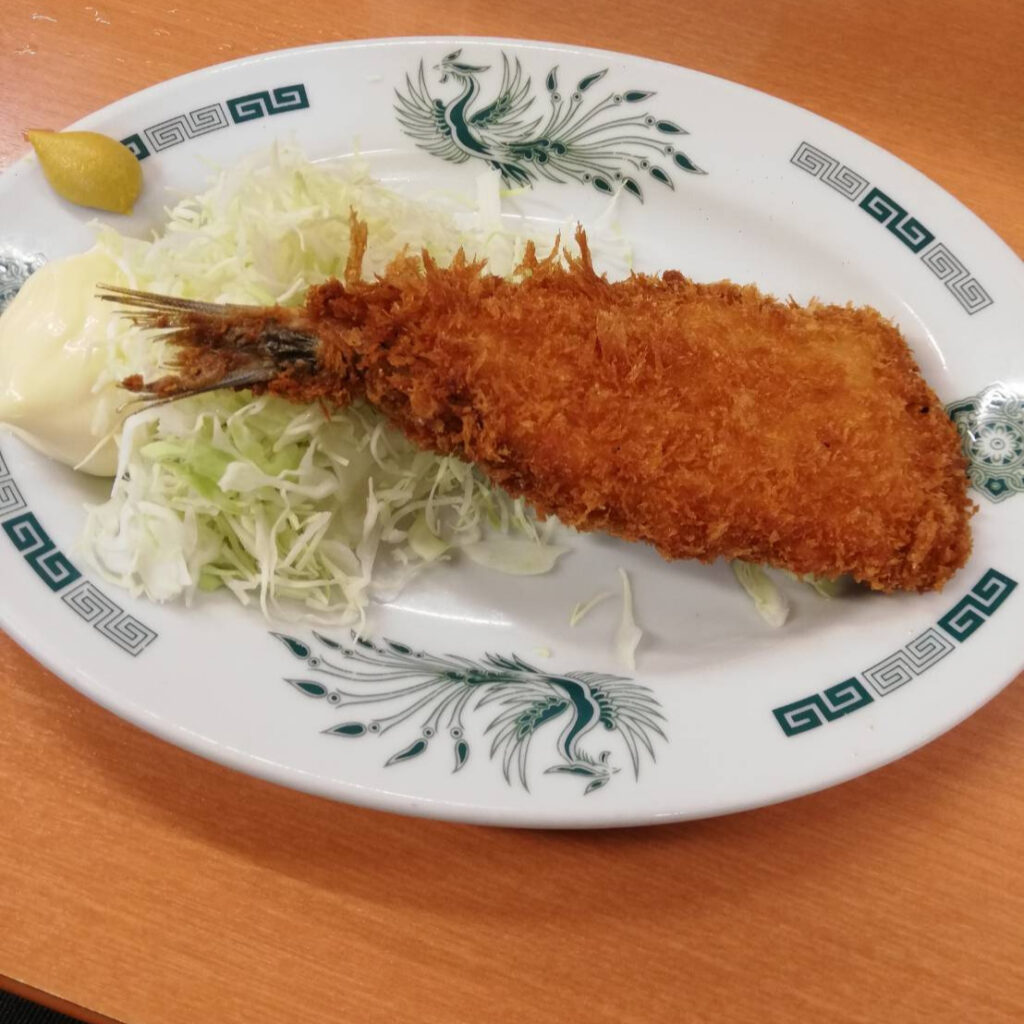
Fried sardines (Iwashi fry). This year, there’s a bumper sardine catch. I studied sardines at Kindai University. Sardines are caught in Osaka Bay. Fishermen want to know where the sardines are to save on fuel costs for their fishing boats. I figured out the shortest route to the sardine fishing grounds. Osaka Bay, viewed from a satellite, is colored red, yellow, and green. Red indicates the sardine fishing grounds. Sardines feed on phytoplankton. Sardines gather in areas with red tides, where phytoplankton is abundant. By knowing satellite images, fishermen can quickly reach the sardine fishing grounds. I wrote the graduation thesis with much fascination.
4,500 yen / per a person
Duration: 2.5 Hours
Local cuisines also called home cooking are becoming popular for foreign visitors to Japan and foreigners living in Japan. Home cooking and restaurants are different. What Japanese usually eat at home can be experienced in my lessons. For example, sardine dishes. Sardines are affordable and tasty hence a long-loved friend of Japanese people. Things to think about are sardines are caught all over the world and there are many ways to cook. I also want to introduce Keihan is a typical local dish of the Amami region. It might be a good idea to make use of my overseas experience. Senegalese Thieboudienne (fish and rice), Filipino Adobong Pusit (marinated squid), French Soup de Poisson (fish soup). I have plenty of ideas. Please look forward to the launch of my cooking classes.
How to Book & Cancel Policy

Omu-Rice is one of the favorites of the visitors from overseas. Make salmon fried rice. For one person, use 200g of the leftover rice and an egg. Grilled salmon becomes invisible after wrapping tamagoyaki, but recommended. Frying pan size is important to make tamagoyaki. Too big is not good. Be careful, the ketchup pours out (mottainai). Marinated octopus in wine vinegar was a dish that was served with.
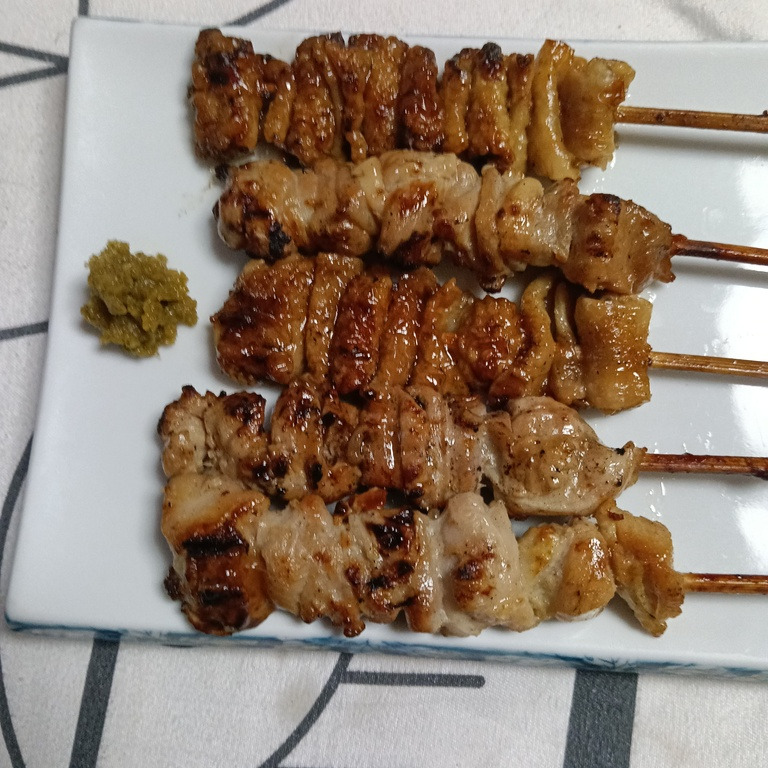
Yakitori. A popular Japanese dish. Eating out is fine, but my guests like to grill it by themselves. With a gas stove, grill net, pot, and hot plate, we can make yakiniku, okonomiyaki, oden, sukiyaki, and Ishikari nabe. There are many ways to eat yakitori, but I eat it with yuzu kosho. Yuzu kosho is a condiment that originated in Kyushu. We can buy it at the supermarket, but I make it by grinding the peel of a green yuzu, green chili peppers, and salt. I let it sit in the refrigerator for a week.

Miso-Soup became common among the samurai society during the Kamakura period (1185 – 1333). Common ingredients in miso-soup are tofu, abura-age (deep-fried slices of tofu), naga-negi (green onion), wakame seaweed, Japanese radishes and potatoes. Here, we will use eggplant and yakifu (baked wheat gluten). Unlike most western soups, miso soup is not to be eaten with a spoon. Hold the bowl and bring it to your mouth to eat its contents with your chopsticks. https://kokoro-jp.com/culture/316/

Oyako means “parent (chicken, oya) and child (egg, ko)”. Cut chicken momo niku (thigh meat) into 2cm squares and grill it with the skin-side down. No oil. A seasoning is Mentsuyu (noodle soup base) and Water only. 1:2. Beat 2-4 eggs and break into three parts. Top with eggs like writing the “の” character. Preferably half-baked. Difficult to control heat. Adding onions becomes more delicious. Lastly, make a bowl (don). Bottom, rice. On top of that, oyako. Sprinkle mitsuba (flavorful leaves). As you like, shichimi togarashi, beni shoga, kona sansho.

A traditional miso soup that originated from Kagoshima Prefecture. Only three ingredients. Mugi Miso, Bonito Flakes and Green Tea. Put raw egg, minced ginger, chopped green onions, if you like. Good for recovering from fatigue. Also, chabushi is the best cure for hangover.
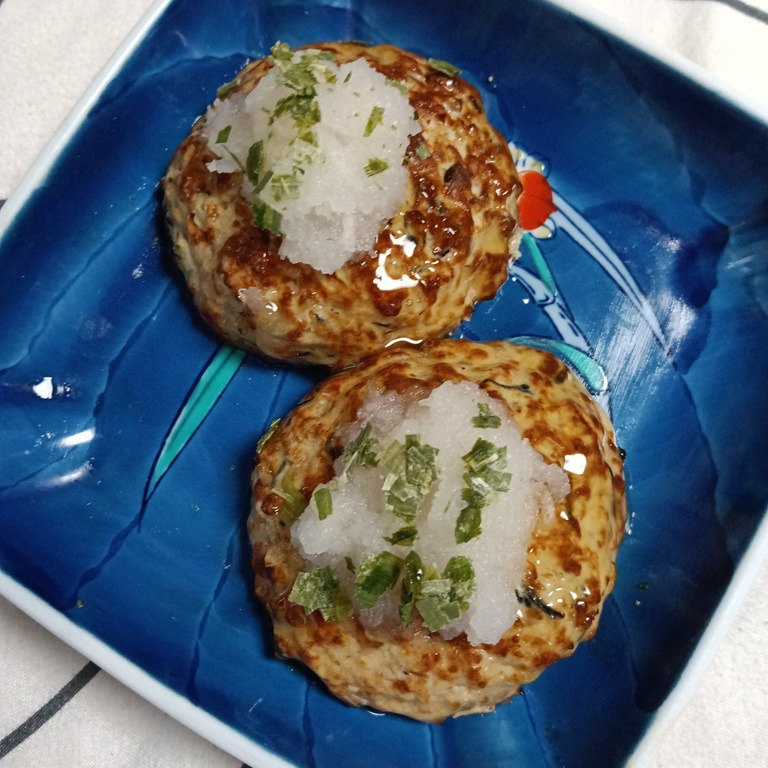
Tofu hamburgers are popular with tourists visiting Japan. They are healthy and juicy. A meaty, Japanese-style dish that you wouldn’t expect from tofu. You can use either momen or kinu tofu. If possible, use chicken breast for the ground chicken. Thigh meat is more expensive. It’s delicious served with grated daikon radish and chopped green onions, and dipped in ponzu sauce.